
Lombard Epoxy Flooring installs epoxy garage floor systems in Lombard, IL, serving surrounding cities including Northlake, Westchester, Wood Dale, Hinsdale and Bensenville. With more than 20 years on local concrete, we build garage floors that are ground, repaired, moisture tested and coated in layers, so they hold up to the brine, rock salt and grit that come in on every set of tires from November to March.
A garage is the hardest residential floor to coat well. The slab sits closest to the weather, it often has no vapor retarder under it, it soaks up oil and salt for years before anyone thinks about it, and it carries the weight of a car on four hot tires every day. A coating that looks fine for a month can peel in patches the first winter if any of that is ignored.
Our proposals list the product line, the number of coats and the finished thickness for every garage, along with the moisture result and the repairs we found. That way you can compare quotes on what is actually going down, and check the finished floor against what was promised.
What Goes Into a Garage Floor That Lasts
Mechanical Grinding to a Measured Profile
Every garage is ground with a diamond grinder, or shot blasted on larger floors, to open the surface to a concrete surface profile the coating maker specifies, usually around ICRI CSP 2 to 3 for a garage system. Grinding removes the weak top layer, old sealers and surface contamination that an acid etch leaves behind. The grinders run with vacuum dust collection at the machine, which keeps the dust out of the house and away from the garage floor drain.
The edges and corners get the same treatment with smaller tools, because that is where an etched floor usually starts peeling first. Once the whole slab is open, we vacuum it, check the profile by eye and touch, and make sure nothing is left on the surface that would sit between the concrete and the primer.
Crack, Spall and Joint Repair
Cracks, spalls and pitted areas are mapped during the estimate and repaired after grinding with epoxy or polyurea fillers that are ground flush. Control joints can be filled for a smooth floor or honored and recut, depending on how much movement the slab shows. Salt-scaled areas near the door are filled so the finished floor reads as one even surface instead of showing every old pit.
Where the slab has heaved, settled or broken into pieces, a coating is not the right answer. We tell you that up front and point you toward slab replacement first, since a coated floor will crack right along with the concrete underneath it.
Moisture Testing Before the Price Is Final
Garage slabs in Lombard are often poured straight onto the ground without a vapor retarder, because the residential code allows it, and the soils here hold water close to the surface. We screen with the ASTM D4263 plastic sheet test and move to calcium chloride testing under ASTM F1869 or relative humidity probes under ASTM F2170 when the result needs a number. If moisture is high, a moisture-mitigation primer is added and priced as its own line.
Choosing the System for Your Garage
Epoxy Base With a Flake Broadcast
The most common garage system we install is a 100% solids epoxy base, a full vinyl flake broadcast and a clear topcoat. The epoxy builds thickness and bonds hard to the ground slab, the flakes add texture and hide dust, and the topcoat seals everything in and takes the daily wear. It is the system that best handles tracked-in salt and grit.
Flake blends come in dozens of color mixes, and chip size changes the look from a fine granite effect to a bold speckle. Because the flakes are broadcast to rejection, the floor ends up with a consistent texture from wall to wall rather than a few decorative chips scattered across a painted surface.
Polyaspartic Topcoats for Speed and Sunlight
A polyaspartic topcoat cures faster than epoxy and resists the ultraviolet light that comes through an open garage door, so it does not yellow over time. It is also highly resistant to abrasion and to the chemicals a garage sees, from road salt brine to gasoline drips. Most of our flake garage floors are finished with one for those reasons.
Solid Color and Quartz Options
A solid color epoxy with a topcoat suits workshops and utility garages where a simple, bright floor that shows spills is the goal. A quartz broadcast gives a heavier texture and more grip, which some owners prefer near the door where snow melts off the car. Each option is written into the proposal with its coat count and thickness.
What Changes the Price of a Garage Floor
The biggest variables are the size of the garage, how much crack and spall repair it needs, whether an old coating or paint has to be ground off, and whether the moisture test calls for a mitigation primer. The system matters too: a single solid coat costs less than a full flake broadcast under a polyaspartic topcoat. We break each of those out as its own line, so you can see exactly where the money goes and compare the quote fairly against another one.
A lower price often means a thinner coat or a skipped step, usually the grinding or the moisture test. Those are the two things that decide whether the floor is still bonded in five winters, so they are the last places we would ever cut.
Garage Conditions Specific to Lombard
Winter Salt, Brine and Freeze-Thaw
Road crews and driveways put brine and rock salt on the cars all winter, and that salty water drips onto the garage slab and soaks in through every freeze-thaw cycle. Bare concrete scales and pits under it, and a thin coating can lift. A sealed, chemical-resistant floor keeps the salt water on the surface where a squeegee can push it out the door.
Cold Slabs and Cure Timing
Epoxy and polyaspartic coatings need the slab itself to stay within the product’s temperature range and above the dew point while they cure. In an unheated Lombard garage during a deep cold stretch, that may not be possible, and we would rather reschedule than install a floor that cures soft or develops amine blush. Spring through fall is the easiest window for unheated garages.
Attached Garages and the House Next Door
Most Lombard homes have attached garages, and the village requires an approved noncombustible floor surface in them. We keep grinding dust contained with vacuum collection, seal the door into the house while we work, and pick products with low odor wherever the system allows. You stay in your home during the job, and the garage is closed off until the floor is ready.
Our Step-by-Step Epoxy Garage Floor Process
Step 1: Slab Assessment and Written Proposal
We look at the slab, test it for moisture, map the cracks and old coatings and talk through how you use the garage. The proposal names the system, the coat count, the thickness, the repairs and the schedule.
Step 2: Grinding and Repair
The slab is ground and vacuumed, then cracks, spalls and joints are filled and ground flush. This is the step that decides whether the floor lasts.
Step 3: Base Coat and Broadcast
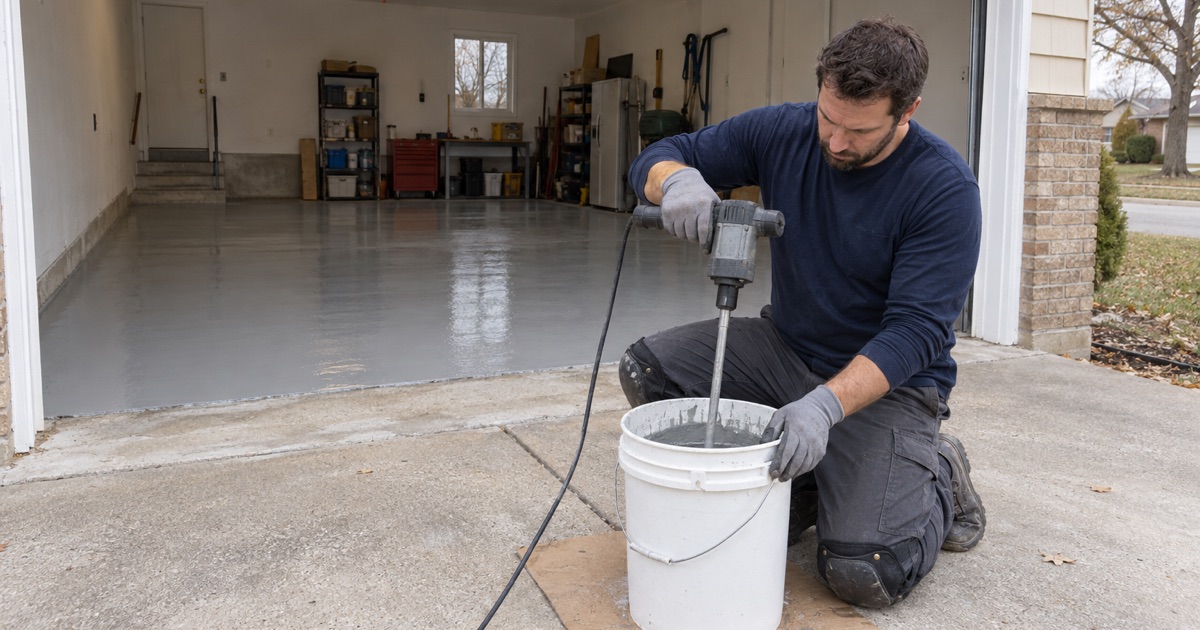
The primer or base coat goes down, followed by the flake or quartz broadcast while it is still wet. Once it cures, the excess is scraped and vacuumed off.
Step 4: Topcoat and Cure
The clear topcoat seals the system, and we leave you with the exact dates for foot traffic and for parking based on the products and the slab temperature. We also walk the floor with you and explain how to clean it, which mostly comes down to squeegeeing out winter salt water and using a neutral cleaner rather than harsh solvents.
- 20+ Years Coating Concrete
- Moisture Tested Before Pricing
- Free Written Estimates