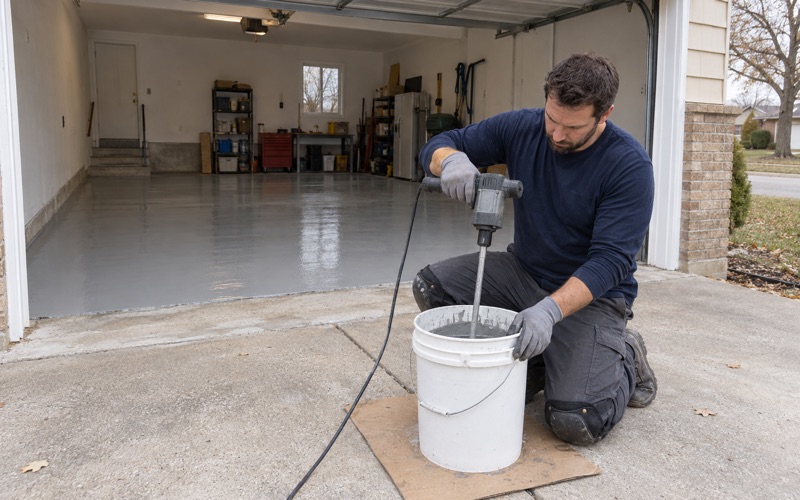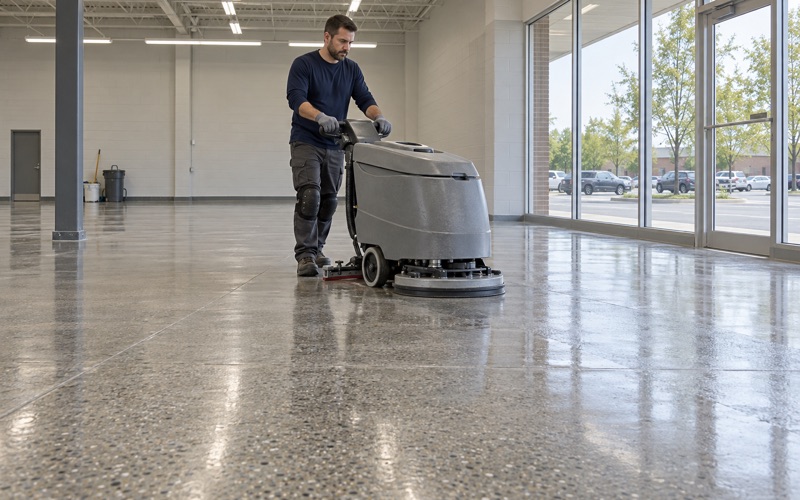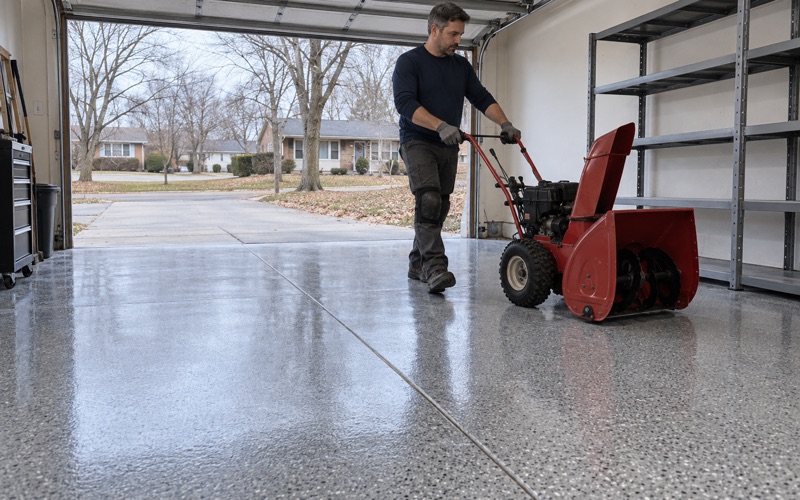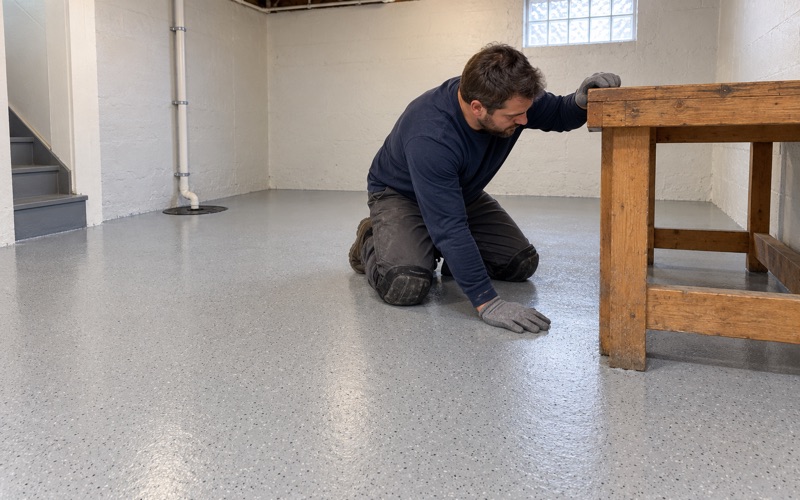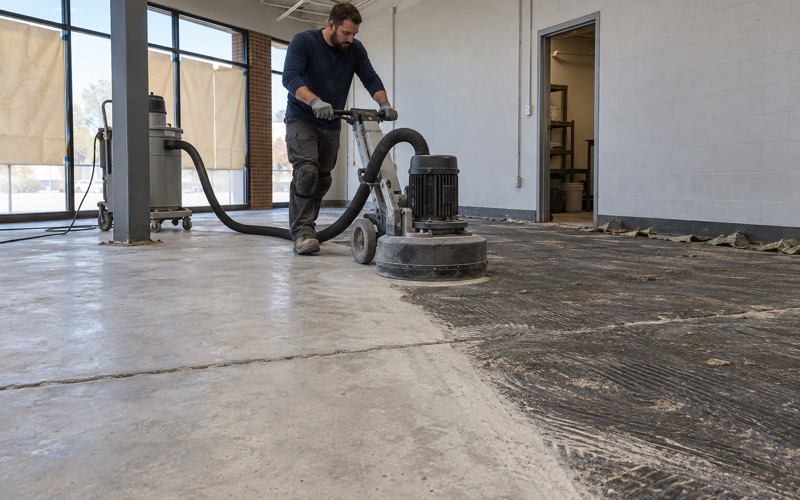
Lombard Epoxy Flooring brings 20+ years of coating work to epoxy-flooring in North Aurora, and the work starts from a simple premise: a coating is only as good as the slab under it and the honesty of the quote above it. We open every slab with a diamond grinder or a shot blaster rather than an acid etch, so the resin has a real profile to bond to. The proposal spells out the product line, how many coats go down and the finished thickness, which gives you a way to check the floor against the paper.
This page takes up one practical question that public buildings, offices and commercial spaces can run into: what happens to the floor when water gets in through a wall. The answer has less to do with the coating than with drying time, and a sealed hard floor changes that clock in a way carpet does not. We also explain where a coating’s usefulness stops, because a floor finish does nothing about the wall that let the water in.
Before any price is final, a moisture test goes into the written scope, and we map cracks, spalls and old coatings so you know whether the slab needs repair first. If it does, we say so plainly. Moisture is also the first exclusion we name when we walk you through what a coating warranty does not cover.
Messenger Public Library and Water Through a Wall
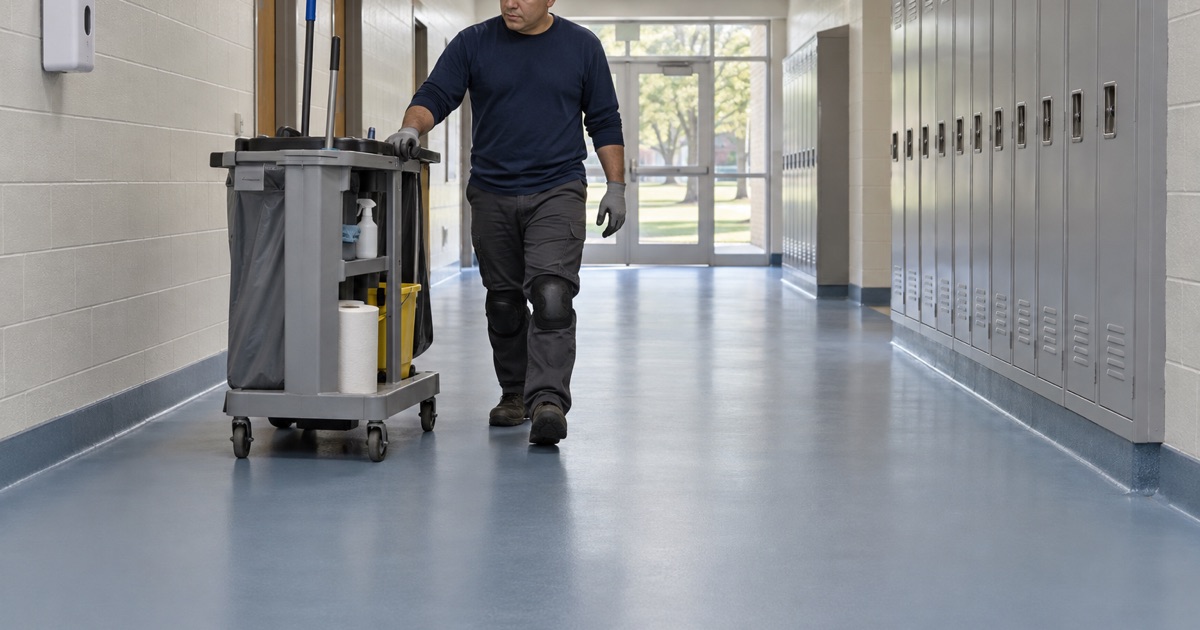
The Messenger Public Library has stood at 113 Oak Street since 2003, the latest home for a library that opened in a former post office in 1937. Its architect’s project record for an exterior facade renovation completed in 2021 states that the building facade needed water infiltration repairs corrected, alongside other general wall repairs under the library’s Deferred Maintenance Plan. That record does not describe interior damage, and we have no knowledge of which rooms, if any, the water reached.
The library’s history in North Aurora tracks the Fox River, which runs north to south through the village. In 1952 it moved into a new building on the east side of the river that also housed the Village Hall and Fire Department, and in 1985 it bought 14 E. State Street, where a series of renovations and expansions followed before the move to Oak Street. Its current Oak Street building sits in the Aurora Township part of the village, in Kane County.
What the record does and does not tell us
Separately, a 5,778-square-foot Youth Services renovation finished in 2014 used colorful walls and carpet tiles to add visual appeal to that department. We cite both projects for what they show about the life of a public building, not as a story about water reaching any floor. The library is not a client of ours, and nothing on this page describes its floors today.
Why the floor question becomes drying time
When water gets into a building through a wall, the repair belongs to the wall. What a floor contributes is how quickly the room can be dried, cleaned and put back into use once that wall is addressed. That is a real difference between flooring types, and it is the one place where a coating choice matters in this situation.
For a building manager weighing a floor along an outside wall, the useful comparison is not which surface looks best on opening day. It is which surface turns a wet morning into a short cleanup instead of a long one.
Looking for epoxy-flooring closer to Palos Heights? See Epoxy-Flooring Services in Palos Heights.
EPA’s 24-to-48-Hour Clock for Wet Floors
The U.S. EPA guide Mold Remediation in Schools and Commercial Buildings includes a table of strategies for responding to water damage within 24 to 48 hours. It sorts materials by type and gives each its own cleanup steps. Chapter 2 of the same guide adds a plain instruction to clean and dry wet or damp spots within 48 hours.
Carpet and its backing
For wet carpet and its backing, the table’s target is to dry within 24 to 48 hours. The steps it lists are removing water with a water extraction vacuum, reducing ambient humidity with a dehumidifier and speeding up drying with fans. In practice that means dehumidifiers and fans set up and running, often while the room stays closed to the public.
Concrete, vinyl and tile
Concrete or cinder block surfaces get a similar treatment: extraction first, then dehumidifiers, fans and heaters as needed to speed the drying. For porous hard flooring such as linoleum, ceramic tile and vinyl, the table says to vacuum or damp wipe with water and mild detergent and allow it to dry. It then adds a second step: check that the underflooring is dry, and dry it if necessary.
Non-porous hard surfaces
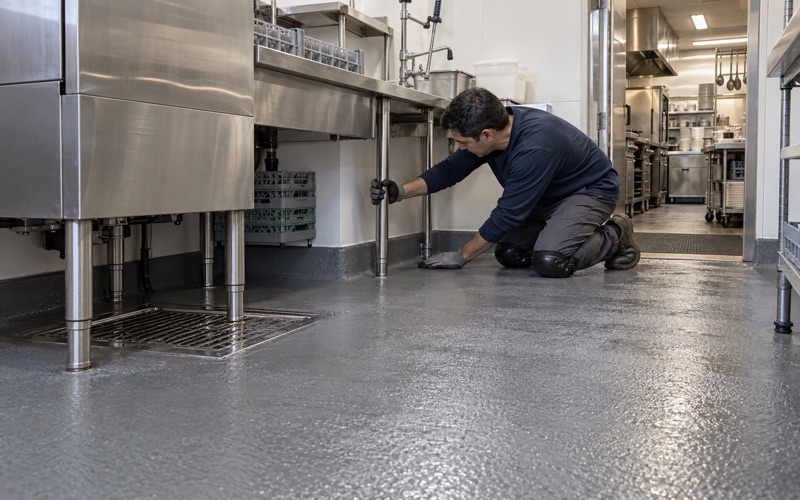
Non-porous hard surfaces get the shortest entry on the table. The guide says to vacuum or damp wipe them with water and mild detergent, allow them to dry, and scrub if necessary. There is no backing to extract water from and no underflooring line attached to it.
We read this table as published guidance on cleanup timing, not as a rule that binds any particular building. It is useful to a facility owner because it shows, in one place, how much work each floor type asks for after a leak.
What the clock means for a floor choice
A 24 to 48 hour window is short when a room has to be extracted, dehumidified and fanned before anyone can judge whether the backing dried. It is generous when the floor only needs a wipe. That gap is the practical reason a facility owner might weigh floor type room by room instead of choosing one finish for a whole building.
Carpet Tile, Vinyl and a Sealed Hard Floor After a Leak
Each common commercial floor answers the drying question differently. None of them is wrong in every room, but the differences are sharpest along a wall that has let water in before. What follows is how each one behaves in the hours after water arrives.
Carpet tiles
Carpet tiles earn their place in reading areas and children’s rooms for comfort, sound control and color. After a leak they behave like any carpet: the fibers and backing hold water, and the 24 to 48 hour clock starts with extraction and air movement. A tile layout can make it easier to pull and replace a wet section, but whatever stays down still has to be dried.
Vinyl and ceramic tile
Vinyl and tile shed surface water well, which is why they read as the safe choice. The catch is what sits beneath them. EPA’s table asks for the underflooring to be checked and dried if necessary, and that check can mean lifting material along the wall to see what the seams let through.
A sealed, non-porous coating
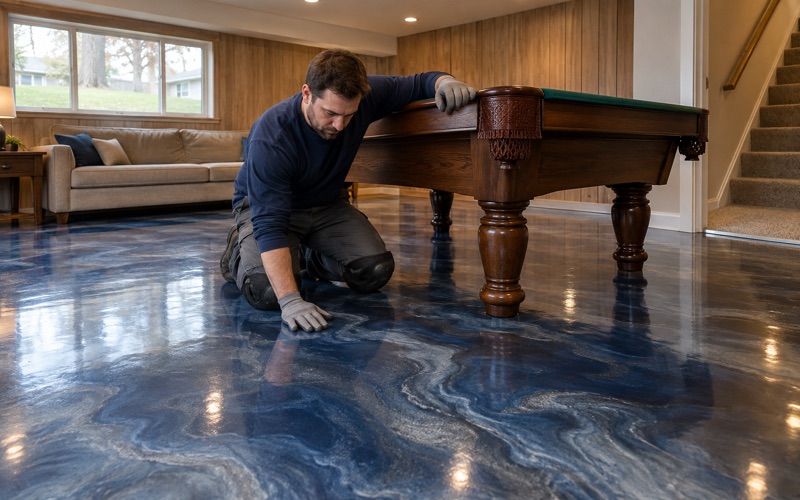
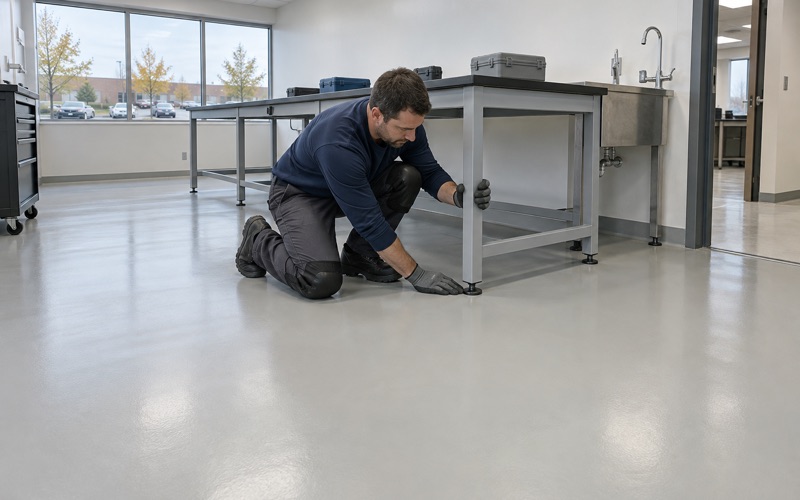
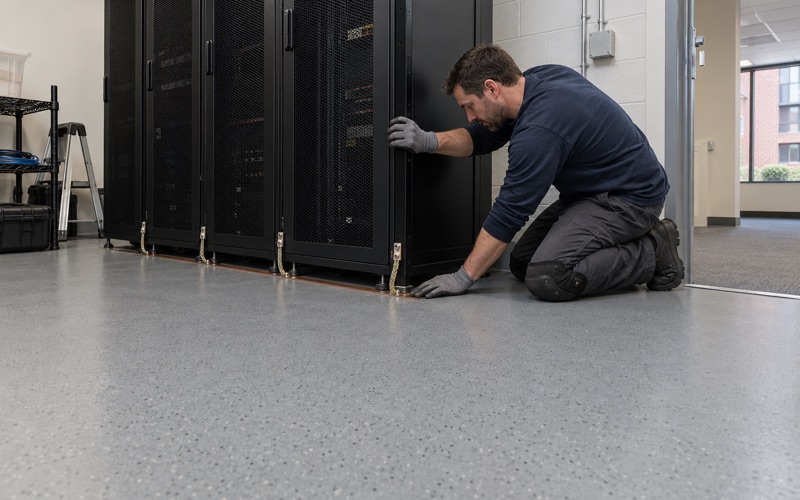
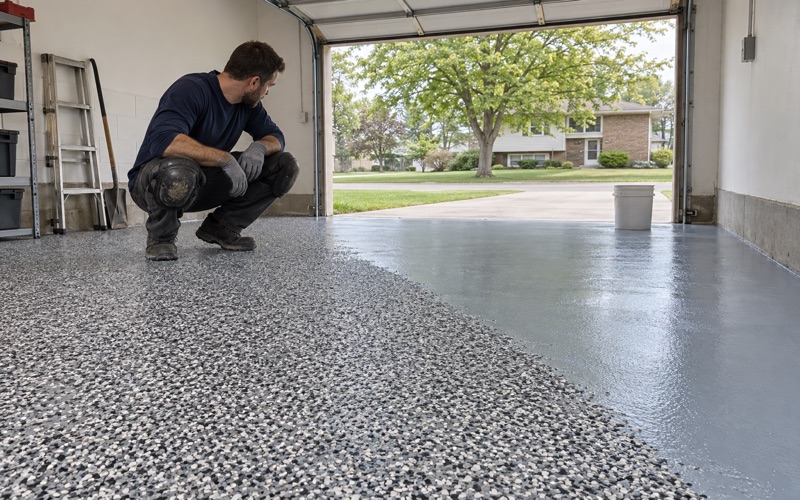
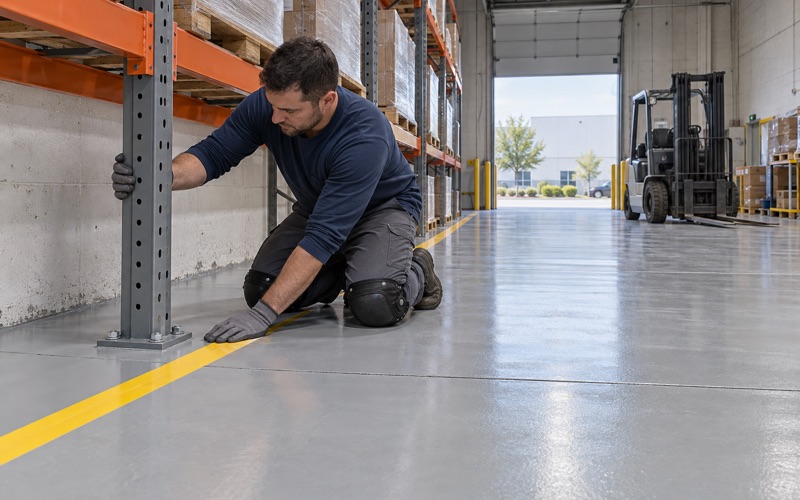
A properly installed epoxy or polyaspartic system bonded to a ground concrete slab is a continuous, non-porous surface with no backing and no seams for water to slip under. After a leak it falls into the simplest category on the table: wipe it, let it dry, scrub if needed. In a room along an exterior wall, that can make the cleanup after a leak noticeably shorter.
Getting that surface depends on the slab underneath. We run moisture testing such as the ASTM F1869 calcium chloride test or ASTM F2170 in-situ relative humidity probes before we price the job, because vapor rising through concrete can lift a coating from below however dry the room is kept. Where the readings call for it, a moisture-mitigation primer goes into the written scope rather than showing up later as a surprise.
Matching the floor to the room
Not every room along an outside wall needs the same answer. A reading corner may keep carpet tiles for comfort while a storage room, a workroom or a corridor at the building’s edge moves to a coated concrete floor. We help sort those rooms by how they are used and how quickly each one has to reopen after water.
Rooms Along Exterior Walls, and Where the Floor’s Job Ends
Rooms that share a wall with the outdoors carry a different risk than interior rooms. In a library, an office or a school, those perimeter spaces often hold computer stations, reading areas, storage and program rooms, which is exactly where a facility manager wants a fast return to service. A coated floor is one way to make that return shorter, provided the slab is sound and dry when it goes down.
Reading the perimeter before we coat
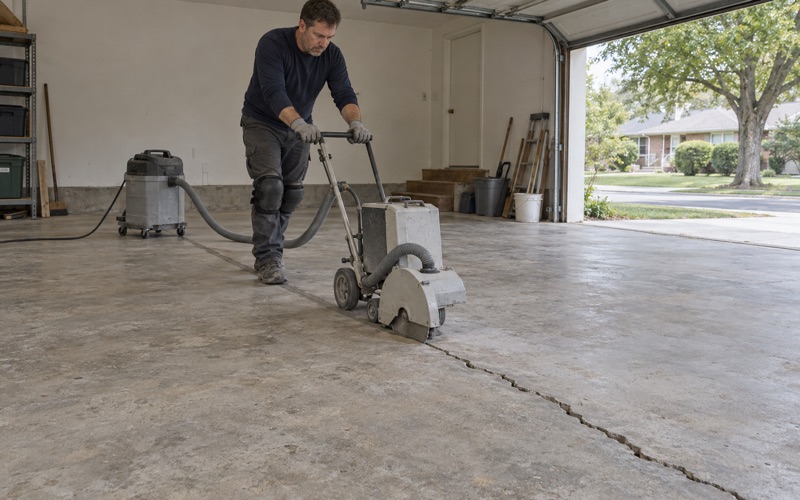
Before we coat a floor along an outside wall, we look for signs that water has come through before: efflorescence at the base of the wall, staining, failed old coatings and cracks running toward the perimeter. Those are mapped with the rest of the slab’s condition and shared with you before the price is set. If the slab itself needs repair or replacement first, we tell you rather than coating over the problem.
The wall stops the water, not the floor
A floor coating does not seal a building against water, and on its own it is neither a leak repair nor a way to control mold. Water coming through a facade is stopped by fixing the facade, which is the kind of work the library’s 2021 project addressed. A sealed floor makes the aftermath easier to clean and dry, but if the wall keeps leaking, the room keeps getting wet.
That is why we ask about any past wall or window repairs when we scope a perimeter room. If a leak is still active, the right order is the wall first, a dry slab second and the coating last.
Scheduling around an open building
Public and commercial rooms rarely get to close for long. We phase office, clinic, school and store floors around operating hours, using overnight and weekend windows where a space cannot shut down. Cure timing follows slab temperature and dew point rather than the calendar, and grinding dust is captured at the machine by vacuum instead of being washed toward a floor drain or a storm inlet.
The products we specify sit inside the Illinois VOC limits for floor and industrial coatings, which apply to whoever applies them. Where a room needs traction, the slip resistance comes from the broadcast and topcoat named in the proposal, such as a quartz aggregate broadcast under a polyaspartic topcoat.
For a building in North Aurora with rooms along its outside walls, the question worth bringing to us is how fast each floor can return to service after water, and what has to happen at the wall first. We answer both in writing, before any grinding starts.
- 20+ Years Coating Concrete
- Moisture Tested Before Pricing
- Free Written Estimates