Lombard Epoxy Flooring has spent more than 20 years on resin floors, and our epoxy-flooring in Prospect Heights starts from a question that is suddenly practical here: what belongs on a floor that sits under business jets. The answer begins with the chemistry of what drips onto the slab, not with a color card. We build every proposal around the liquids a floor will actually meet and the way those liquids are cleaned up afterward.
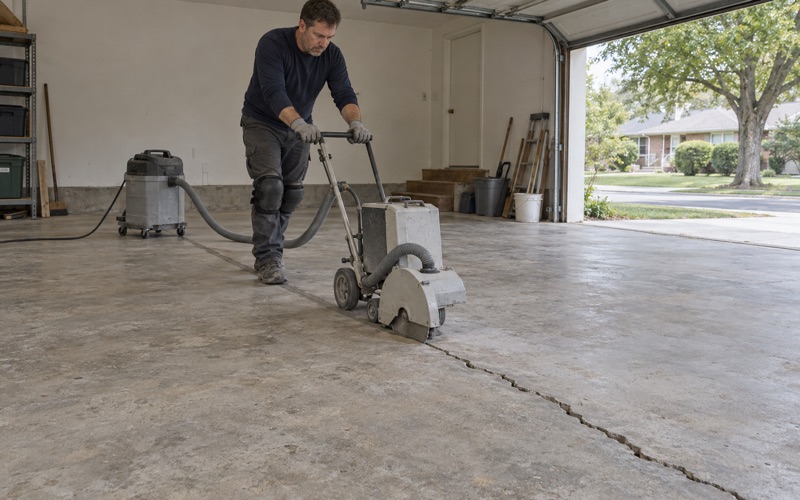
That approach is not reserved for hangars. On a garage, a basement or a shop floor we map cracks, spalls and old coatings before quoting, and we say plainly when a slab needs repair or replacement before it should be coated at all.
Below we walk through the hangar work taking shape at the airport, what phosphate-ester hydraulic fluid does to coatings, how a test patch settles the choice, and what a homeowner can borrow from all of it. We are not connected to any airport tenant, and nothing here describes a floor we have installed there.
Business-Jet Hangars at Chicago Executive Airport, Mostly Inside Prospect Heights
Chicago Executive Airport, the former Palwaukee Municipal Airport, is owned jointly by the City of Prospect Heights and the Village of Wheeling, which acquired it in 1986. It covers 411 acres, and in 2022 it had 259 based aircraft, 81 of them jets. That jet count is why hangar floors are a local subject here and not only a trade one.
What the City Council Approved
Sky Harbour is building a private business-jet hangar campus at the airport. At its August 24 meeting the Prospect Heights City Council approved a special-use designation for airport use, a height variation allowing hangars up to 48 feet against the standard 36, and a flood-control compensatory storage agreement. Building and Development Director Dan Peterson showed nine proposed hangars, only one of them on the Wheeling side.
A land swap netted the city about 2.25 acres and placed most of the development inside Prospect Heights, which makes the city responsible for enforcing building codes there. The airport covers both municipalities’ construction costs and fees under an existing agreement. For floor work on most of the campus, that puts the code questions with Prospect Heights rather than Wheeling.
What Is Being Built, and When
Groundbreaking came in mid-September 2026, and opening is expected in early 2028. Trade reports describe a first campus of 16 acres with four private hangars of 18,000 to 37,000 square feet, plus suites and offices beside them, closed to transient traffic. Earlier plans showed more hangars, and the counts differ by source and date.
We have not seen those floors, the tenants’ aircraft or their fluids, and we have no role on the project. What follows is how we would think through a hangar floor here, using the fluid maker’s own handling sheet as the spine.
Looking for epoxy-flooring closer to Chicago Ridge? See Epoxy-Flooring in Chicago Ridge.
Phosphate-Ester Fluid: What It Softens and How It Comes Up
Many business jets run phosphate-ester hydraulic fluid, sold under names such as Skydrol. Eastman, which makes Skydrol, describes the fluids as phosphate ester-based and blended with performance additives. Its hangar safety sheet is direct about what that chemistry can do to the materials around an aircraft, and those warnings are where a floor specification should start.
Softening You Cannot See Coming
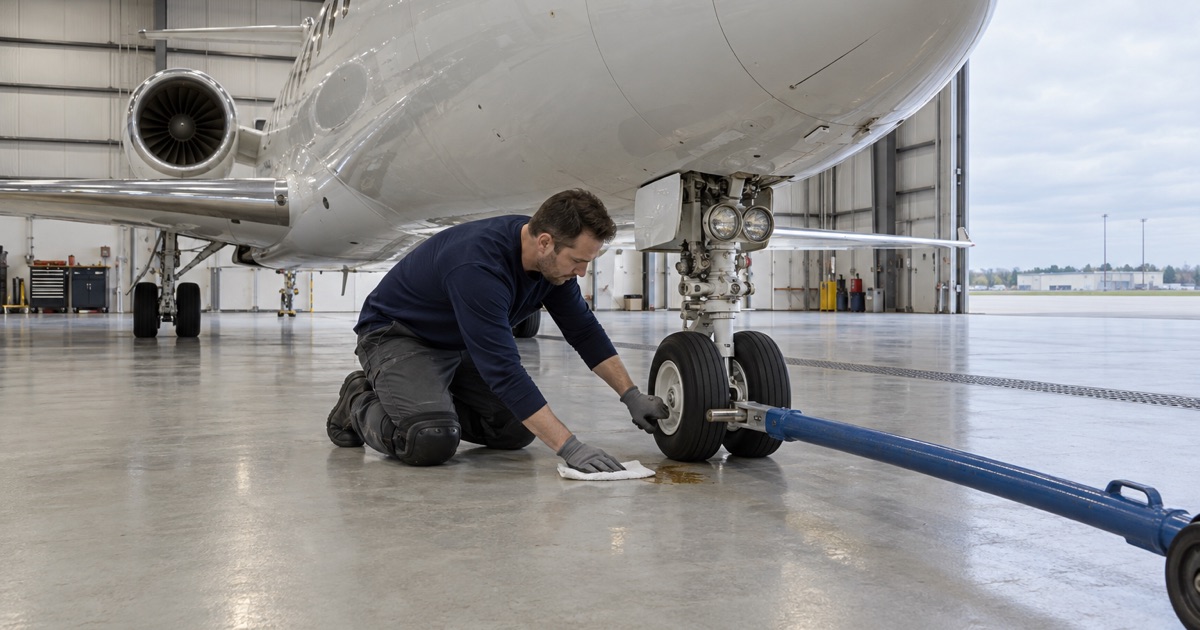
The sheet warns that care is needed to keep Skydrol from spilling on plastic materials and paints that tend to soften. It also says some types of rubber-soled shoes may soften and deteriorate. A floor coating is a polymer film, so it belongs in that conversation rather than outside it.
The line that matters most for flooring is this one: since it is difficult to visually distinguish between materials that are resistant and those that aren’t, Eastman recommends wiping off and cleaning all materials as soon as possible. In plain terms, a glossy floor that looks fine after a spill tells you nothing. Resistance is a question for the coating maker’s data, not for the eye.
One coating maker goes further. Its hangar case study calls Skydrol incredibly corrosive and says it can easily damage a concrete floor that is not adequately protected. That is the vendor’s wording, not a measurement, but it suggests a bare hangar slab is not the safe default it might seem.
The Cleanup Is Part of the Spec
Eastman’s sheet lays out the cleanup in steps. A small spill is wiped up immediately with a dry cloth; when large pools form, an absorbent sweeping compound is recommended. Remaining traces come off with an approved solvent such as SkyKleen aviation solvent, and the area is then washed with water and detergent.
Each of those steps touches the floor. The absorbent is swept across the surface, the solvent sits on the topcoat, and the detergent wash follows, so a floor that shrugs off the fluid but dulls or softens under the solvent has still failed. That is why we treat the cleanup chemistry as a selection input alongside the fluid itself, not as a maintenance afterthought.
Two habits keep the floor out of the worst of it. Hydraulic service is done over drip pans, so the slab sees occasional drips rather than standing pools, and drips are wiped the moment they are found instead of waiting for a weekly wash.
Patch-Testing a Hangar Coating With the Fluid and the Solvent
A chemical-resistance chart is a starting point, not a verdict, and one maker’s chart says nothing about another maker’s system. We ask the coating maker for data on the named fluid and the named cleanup solvent, then confirm both on the slab itself.
Data for Both Chemicals, in Writing
Phosphate-ester fluids are not one product, and neither are aviation solvents. The owner or operator knows which fluid the aircraft carry and which solvent the crew uses, and those two names go into our request to the coating maker. If the maker cannot point to data for both, that system does not go on the floor.
That same case study shows how selection plays out. For a 2,000-square-meter hangar at Teesside International Airport, the contractor assessed several makers’ products before choosing one system, then shot-blasted and diamond-ground the slab, laid a moisture-tolerant primer and applied two epoxy coats at 300 and 250 microns, with quartz in specific areas. It is a vendor case study, but the order, assessing first and choosing second, is the point.
Running the Test Patch
A test patch is laid with the same grind or blast profile, the same primer and the same topcoat planned for the full floor, and it is allowed to cure fully before testing. The fluid and then the solvent are applied the way a real spill and cleanup would happen, following the coating maker’s test method for dwell time. We then check for softening, tackiness, dulling or a change in color before anyone signs off.
A patch that passes with the fluid alone and fails with the solvent is a failed patch. Footing is checked on the patch too, and we specify slip resistance by the broadcast and topcoat used rather than promising it as a slogan.
Prep, Moisture and the Written Scope
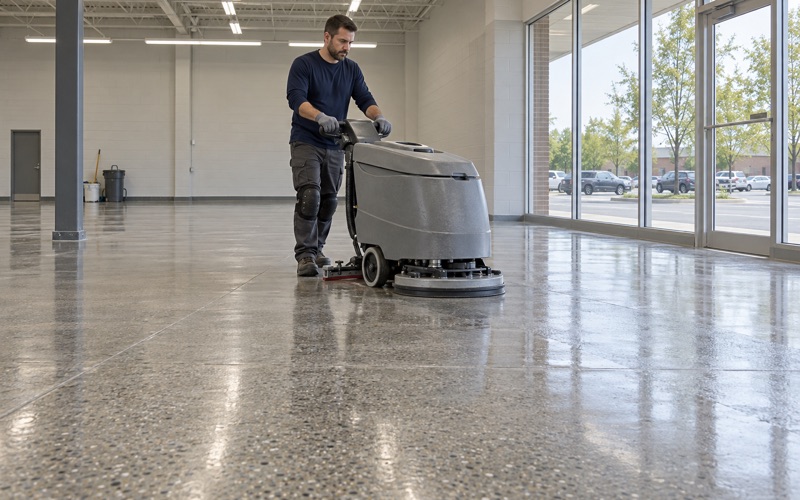
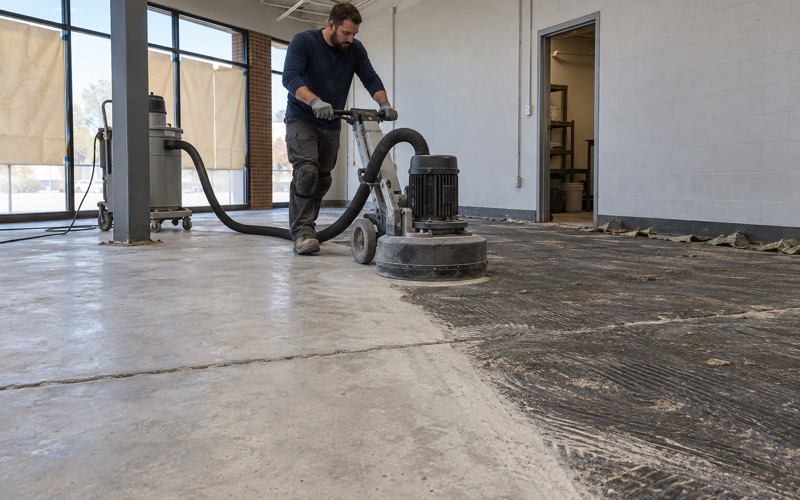
None of the chemistry matters if the coating lets go of the slab. A large hangar slab is opened with a shot blaster or a diamond grinder to a measured ICRI concrete surface profile, and grinding dust is captured at the machine by vacuum rather than washed toward a floor drain or a storm inlet.
A moisture test, by ASTM F1869 calcium chloride kit or by in-situ relative humidity probes, goes into the scope before the price is final. Our proposal then names the product line, the number of coats and the finished thickness, and it explains what the coating warranty leaves out, with moisture vapor transmission as the first exclusion we name.
When a hangar or shop cannot close for the job, floor work is phased around operating hours, with overnight and weekend windows. Each phase gets its own full cure before aircraft or vehicles roll back onto it.
Your Own Garage: No Skydrol, but the Same Wipe-It-Now Rule
A home garage in Prospect Heights does not need a hangar specification, and a residential floor gains nothing from being described in hangar terms. What carries over is the habit. Whatever you spill, a resistant floor and a vulnerable one can look identical in the moment, so the safest routine is to wipe it up now rather than at the next cleaning.
Winter Salt and the Chemicals on Your Shelf
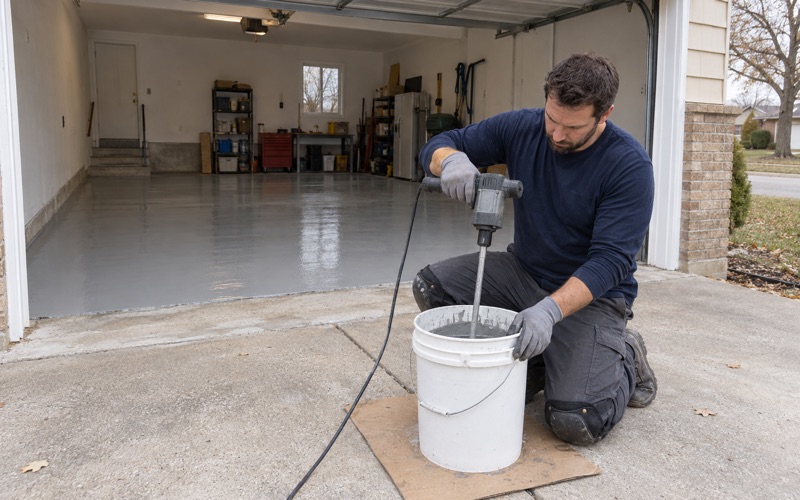
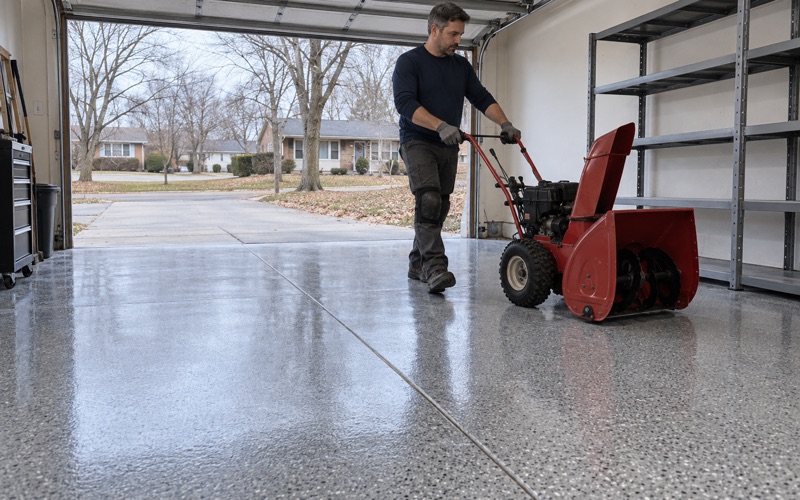
In a Chicago-area winter, the chemical a garage floor sees most is often the brine and rock salt that ride in on tires, and we choose garage systems to hold up to it. A polyaspartic or polyurea topcoat over a 100% solids epoxy base is a common pairing, and a vinyl flake or quartz aggregate broadcast adds texture where wet boots land.
The rest of the shelf deserves a thought too: washer fluid, paint thinner, a fuel can, the cleaner you mop with. If you rely on a particular cleaner or solvent, tell us, and we can check the topcoat maker’s data for it or try it on a test patch before the whole floor goes down. That is the hangar’s patch-test logic, scaled to a two-car garage.
Cure timing follows the same discipline. We schedule by slab temperature and the dew point spread at the surface, not by the calendar, and an unheated garage in deep winter is told to wait. Products are picked inside the Illinois VOC limits for floor coatings, which bind whoever applies them.
When a Garage Slab Needs Work First
If the crack and spall map shows a garage slab should be replaced rather than coated, we say so, and it becomes a concrete job before it is a coating job. The city’s building specifications list concrete flooring for garages and basements among required inspections, so a new slab is a question for the City of Prospect Heights first. Those specifications are marked revised in 2007, so current requirements are confirmed with the city before anything is scheduled.
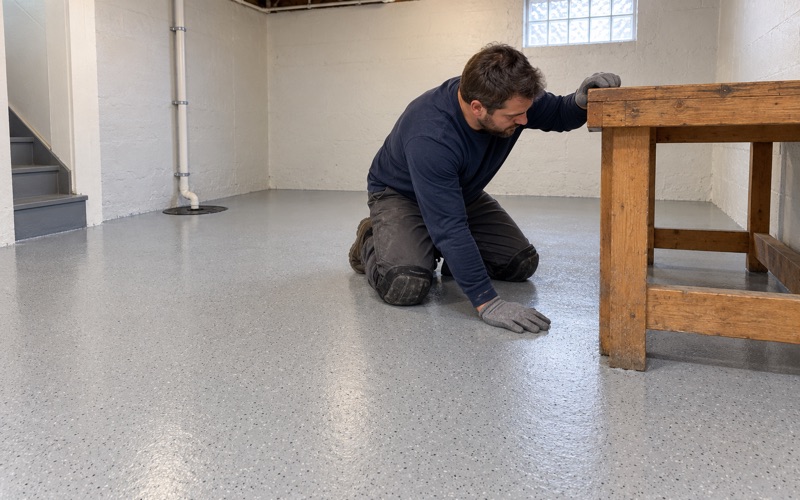
For a home job over the state threshold, you get a written contract and the Illinois Home Repair: Know Your Consumer Rights pamphlet before any grinding starts. Basement floors get one more step: we read them for past water first, because a coating does not stop seepage, a backup or a sump that cannot keep up.
- 20+ Years Coating Concrete
- Moisture Tested Before Pricing
- Free Written Estimates