Lombard Epoxy Flooring has spent more than 20 years installing epoxy flooring in Winfield, and some of the floors we get asked about here are less about looks than about how completely they can be cleaned. A bathroom, a basement bath or a laundry floor that gets wiped down on purpose needs a surface with nowhere for liquid to hide. That is a specification question, and we treat it as one.
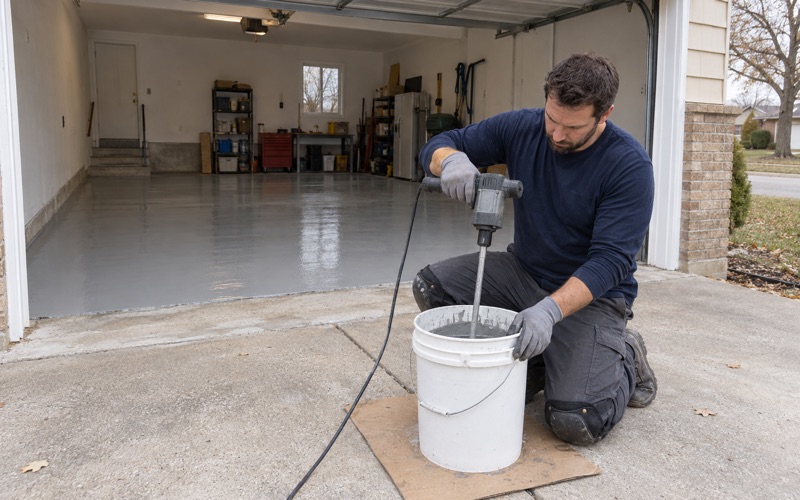
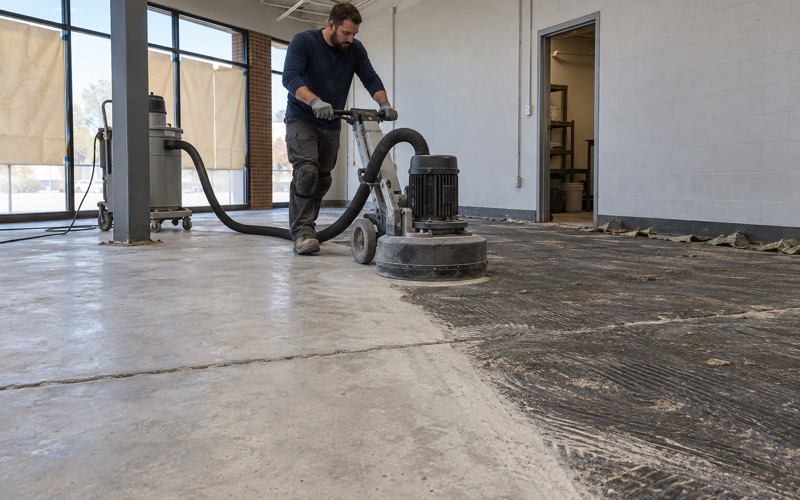
Every slab we coat is opened with a diamond grinder or a shot blaster rather than an acid etch, so the resin has a real profile to bond to. The written scope includes a moisture test before the price is final, and the proposal names the product line, the number of coats and the finished thickness, so you can hold the floor up against the quote.
Below we explain why cancer treatment at home changes the way a bathroom floor gets cleaned, what the published home-handling guidance actually says, and what a seamless, coved floor can and cannot do. No floor replaces the instructions a treatment team gives a family, and we say so up front.
A Family Guest House Beside Central DuPage Hospital
Winfield is an incorporated village in DuPage County, spanning Milton and Winfield Townships, and it is home to Central DuPage Hospital. On Winfield Road, at 0N150, the Ronald McDonald House near Central DuPage Hospital gives families of hospitalized children a place to stay. The builder’s project page describes a 20,000-square-foot house with 12 private guest rooms, each with a private bath, along with a dining and kitchen area where volunteers prepare meals, a library and laundry facilities.
The house serves families whose children are treated at Central DuPage, at Delnor Hospital, at the CDH Cancer Center and at the CDH Proton Center. We have not seen its bathrooms, we do not know which guests are on chemotherapy, and we have never worked on the house. It matters here for a simpler reason: cancer care continues after a family leaves the treatment room, and part of it reaches the bathroom.
Why Treatment Changes How a Bathroom Is Cleaned
After a chemotherapy treatment, traces of the medicine can leave the body in a patient’s fluids for a time. Patient education from Memorial Sloan Kettering therefore asks households to change small habits: sit to urinate, close the lid and flush twice, use a separate toilet if possible, and keep children and pets out of the toilet. Each of those steps keeps fluid contained, and the final instruction concerns the floor.
That is why the bathroom floor becomes the one floor in the house cleaned deliberately after treatment rather than whenever it looks dirty. A floor that is going to be cleaned on purpose should let that cleaning reach every square inch. On many bathroom floors, as the next sections show, that is harder than it sounds.
That reasoning holds for any family guest house near a cancer or proton center, and it holds for an ordinary Winfield home where someone comes back between treatments. At home, the person doing the cleaning is usually a relative working by hand, not a crew with a floor scrubber, so the surface has to do more of the work.
Looking for epoxy-flooring closer to Bellwood? See Epoxy-Flooring in Bellwood.
Forty-Eight Hours, Sometimes Seven Days: What Families Are Told
The Memorial Sloan Kettering handout, last updated in April 2024, says most chemotherapy medicine leaves the body within 48 hours after treatment, but some may take up to 7 days. Its instruction for the room is direct: after 48 hours, clean and sanitize the toilet and the bathroom floor. A Kaiser Permanente handout gives the same 48-hour window for urine, stool, vomit and blood, with cleanup by gloves, paper towels, then soap and water.
The two figures work together. The 48-hour mark is when the routine floor cleaning is scheduled, and the longer window of up to seven days is why a household on certain drugs may be told to keep its precautions running well past the second day. In practice that can mean the same bathroom floor is cleaned and sanitized after every course, for as long as treatment lasts.
What the Spill Kit Assumes
The same guidance describes a spill kit a household can keep on hand: disposable gloves, paper towels, dish soap or laundry detergent, and sealable plastic bags. A spill is soaked up with the towels, and the used supplies go into a bag. Nothing in that kit is a special chemical; it is ordinary wiping and washing, which puts the burden on the surface being wiped.
Soap and water work by lifting residue off a surface and carrying it away on the towel. That only works where the towel can make contact, which is why the condition of the floor is not a cosmetic detail in a household following this guidance.
Where the Care Team Comes In
We are floor installers, not clinicians, and we do not interpret a treatment plan. The timing, the protective steps and the cleanup a given drug needs all come from the patient’s own care team. What we can speak to is the part the guidance takes for granted: that a wipe with soap and water actually reaches the whole floor.
If a care team gives a household different timing or a different cleaning product than the handouts quoted here, their instruction wins, and we choose the topcoat around what they recommend. Tell us what the room will be cleaned with and how often, and the specification starts there.
Grout Lines, Toilet Bases and Bare Concrete: Where a Splash Stays
On a tiled bathroom, the grout lines sit below the tile face and are porous unless they have been sealed and kept sealed, so a paper towel rides over them rather than into them. The joint where a toilet meets the floor, and the seam where the floor meets the wall, are the other two places a splash settles and stays.
Bare Concrete in a Basement Bath
Plenty of basement baths and laundry areas sit on bare or painted concrete. Unsealed concrete is porous, so liquid soaks into the surface instead of waiting on top for a towel, and a worn floor paint lifts and chips until it holds dirt at every edge. Neither surface gives a household much confidence that a cleanup reached everything.
What a Seamless, Coved Floor Changes
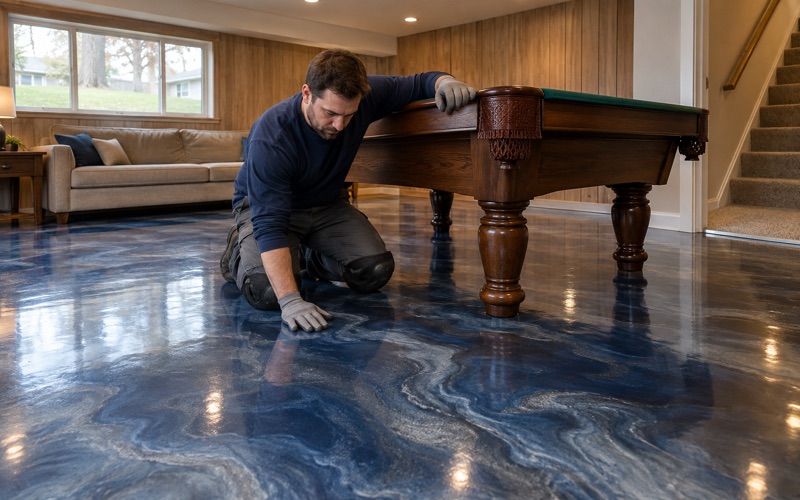
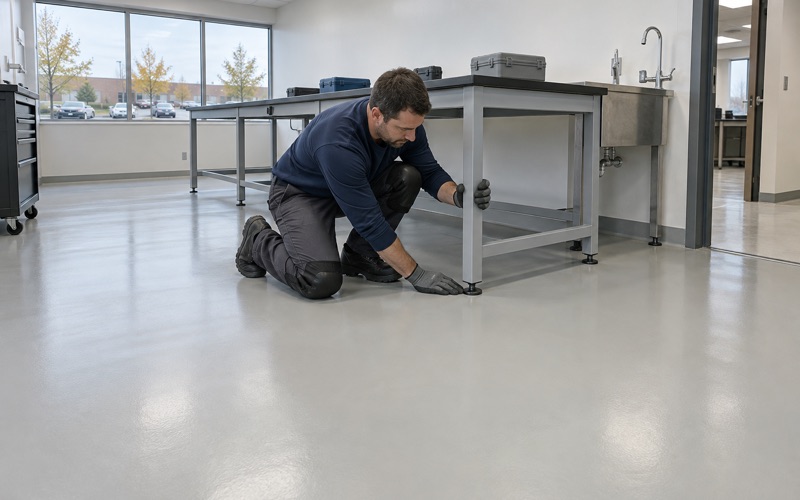
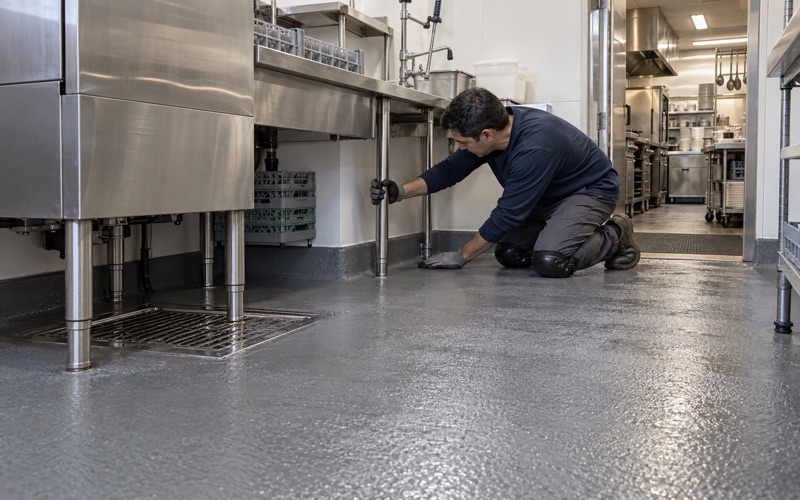
A seamless resin floor removes the joints. The coating runs as one continuous film, it can be carried around a floor drain and under a toilet’s footprint, and a cove carries it several inches up the wall so the corner becomes a curve a towel can follow. That is the same logic behind the FDA Food Code’s coved floor and wall junctures in commercial kitchens, applied to a bathroom at home.
None of this makes a drug less hazardous or a cleanup optional. A sealed floor simply gives the gloves, the towels and the soapy water a surface where the whole job is visible and reachable.
Resin is not the only seamless answer. Sheet vinyl with welded seams and a flash cove can do the same job over a wood subfloor, and on an upper-floor bathroom that is often the more sensible choice. Where a bath or laundry sits on a concrete slab, a bonded resin system is usually the stronger fit, and we will tell you which way we would go.
Planning a Seamless Bath or Laundry Floor at Home
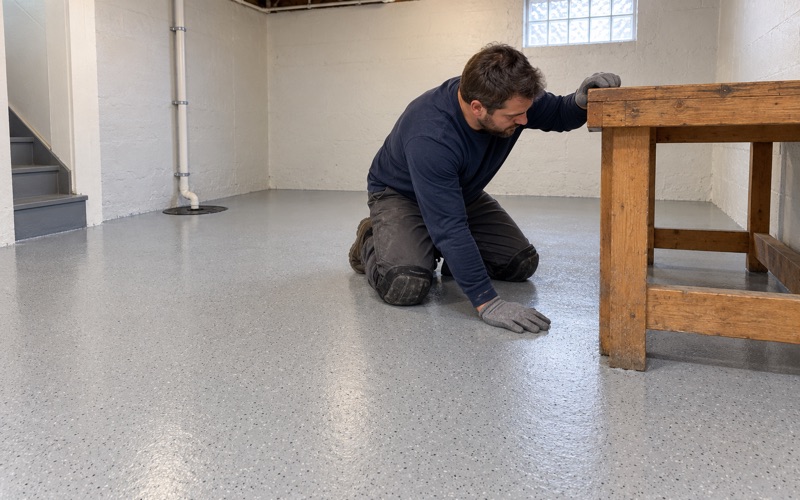
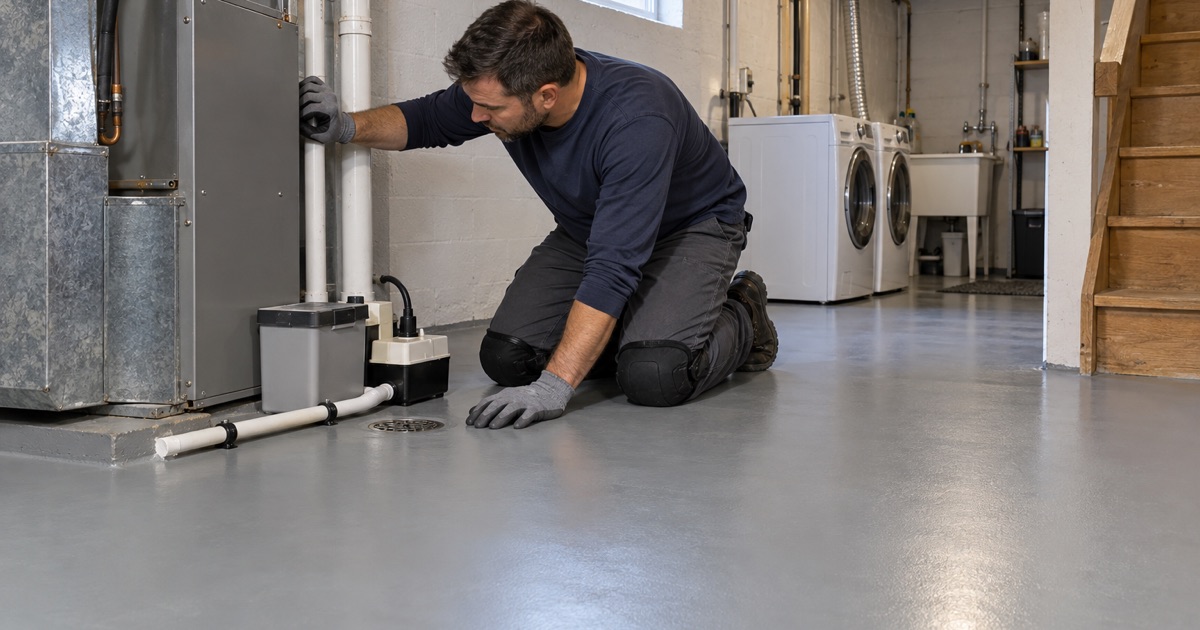
The suggestion to use a separate toilet is where a basement bath often comes in. In a house with more than one bathroom, the lower-level bath is a natural candidate for the patient’s use, and it is also the one most likely to sit on an uncoated slab. A laundry floor nearby, where towels and bedding end up, is often the next one a family asks about.
Winfield homes are mostly owner-occupied, 91.9 percent of occupied units, and 67.6 percent of the housing was built in 1980 or later. For a family arranging a basement bath or laundry floor around a course of treatment, that usually means a builder-grade slab somewhere between 35 and 45 years old. That age matters less than what the slab has been through.
Moisture and Water History Come First
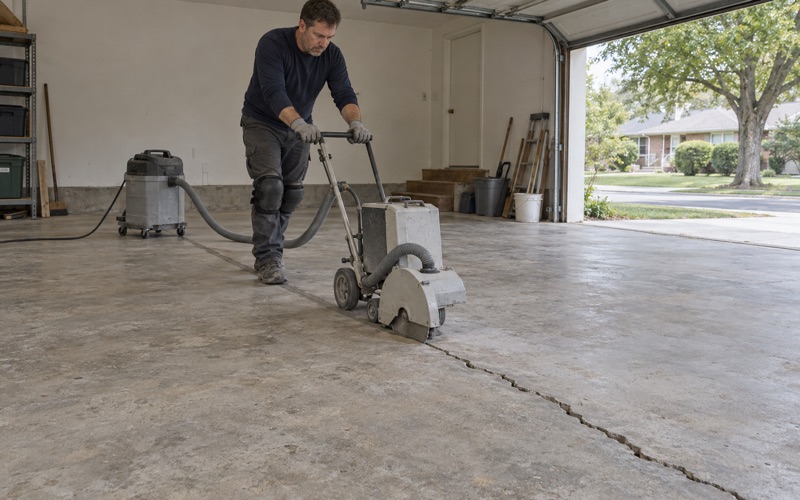
Before we price a basement floor, we look for signs of past water and test the slab, using ASTM F2170 in-situ relative humidity probes or ASTM F1869 calcium chloride testing depending on the floor. A coating does not stop seepage, a sewer backup or a sump that cannot keep up, and moisture vapor coming through a slab is the first warranty exclusion we explain. If cracks, spalls or an old coating mean the slab needs repair first, the written scope says so.
The DuPage River runs through the village, with Klein Creek and Winfield Creek flowing through the surrounding area, yet we do not assume any particular street has a wet basement. Each slab is read on its own evidence: staining, efflorescence, how often the sump runs and the test numbers.
A Finish Chosen for Wiping
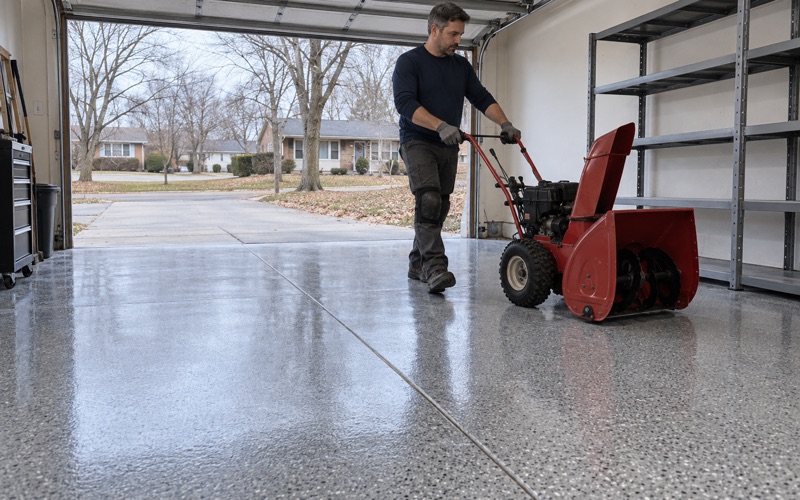
For a bathroom or laundry floor that will be wiped often, we usually specify a 100% solids epoxy base coat with a polyaspartic topcoat and an integral cove at the walls. Texture stays fine: a light quartz or additive texture gives wet footing, while a deep full flake broadcast adds ridges a towel skips over. Slip resistance comes from the named broadcast and topcoat, not from a promise.
In a bathroom the toilet is lifted before the floor is prepared, so the coating runs continuously under where the base will sit instead of stopping at a caulk line around it. Once the system has cured, the toilet is reset on a new seal, and the joint at its base is the one small seam left to watch.
Timing can work around the household too. Our cure schedules follow slab temperature and the dew point, and we can plan the grinding, with dust captured at the machine by vacuum, and the coating days between treatment cycles so the room is back in service when it is needed. Jobs over the state threshold get a written contract and the Illinois Home Repair: Know Your Consumer Rights pamphlet before any work starts.
Fire code questions on a Winfield property go to the Winfield Fire Protection District, a separate special district, and building questions go to the village’s Building Department at 27W465 Jewell Road. Through all of it, the treatment team’s instructions come first; a floor only makes following them easier.
- 20+ Years Coating Concrete
- Moisture Tested Before Pricing
- Free Written Estimates